

Nowadays, playing online poker has become an attractive option for card game enthusiasts. One of Indonesia's best online poker networks is IdnPoker, managed by IDN PLAY. By downloading their online poker mobile app, you can enjoy a real-time poker experience anytime, anywhere. No need to go to a casino; simply use your smartphone or tablet to connect with thousands of other poker players across Indonesia. You can experience the thrill of betting, bluffing, and winning poker games easily through Nirwanapoker, the official IDN Play agent website.
Betting at Toto Macau market becomes more challenging when you understand how previous data of winning numbers can guide your bets. This data reflects the history of drawn numbers and can be analyzed to reveal specific patterns. If you pay attention, you'll notice frequent number combinations or identical numbers appearing within a specific time frame. For a comprehensive data source, the website which provides data Toto Macau is a useful option. With a simple interface and daily updates, players can instantly check the latest results. Don't hesitate to try this technique in your daily strategy. Every opportunity is open to the diligent.
Banyak yang bicara, sedikit yang valid. IDNSLOT adalah situs penyedia link slot online resmi idn play dengan update yang terus bergerak. Bukan janji manis—ini soal akses yang benar di waktu yang tepat. Terlambat satu langkah, beda hasilnya. Masuk sekarang, jangan tunggu besok.
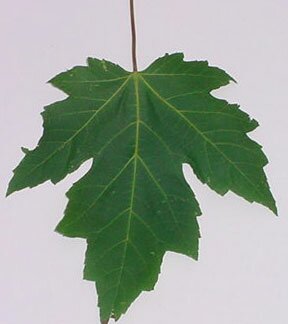
Leaf: opposite, simple; 4-6" (10-15 cm) long and nearly as wide, broadly ovate, deeply 5 lobed and long-pointed (middle lobe often 3-lobed); double saw-toothed, with 5 main veins from base; becoming hairless; slender drooping reddish leafstalk, dull green above, silvery-white beneath; turning pale yellow in autumn.
Flower: 1/4" (6 mm) long; reddish buds turning greenish-yellow; crowded in nearly stalkless clusters; male and female in separate clusters; in late winter or very early before leaves.
Fruit: 1 1/2-2 1/2" (4-6 cm) long including long broad wing; paired, widely forking keys; light brown, 1 seeded; maturing in spring.
Twig: light green to brown; long, spreading and often slightly drooping, hairless; with slightly unpleasant odor when crushed.
Bark: gray; becoming furrowed into long scaly shaggy ridges.
Form: large tree with short, stout trunk, few large forks, spreading, open irregular crown of long, curving branches.
Habitat: Wet soils of stream banks, flood plains, and swamps; with other hardwoods.
Range: southern Ontario east to New Brunswick, south to northwestern Florida, west to eastern Oklahoma, north to northern Minnesota; to 2000' (610 m), higher in mountains.
Location: on the Bunker Hill High School campus, south of gym.
latitude: 39o02.38N
longitude: 089o57.65W
The silver maple is a popular shade tree due to its rapid growth. The branches are brittle and easily broken in a windstorm. Sugar can be obtained from the sweetish sap, but the yield is low.
© Community Unit School District #8, Bunker Hill
504 E. Warren, Bunker Hill, IL 62014
References:
Little, Elbert L. Field Guide to Trees: Eastern Region. New York, NY: Alfred A. Knopf Inc., 1980.
Mohlenbrock, Robert H. Forest Trees of Illinois. Springfield, IL: 1992