%20of%20whitemulberrybarkw.jpg)


Nowadays, playing online poker has become an attractive option for card game enthusiasts. One of Indonesia's best online poker networks is IdnPoker, managed by IDN PLAY. By downloading their online poker mobile app, you can enjoy a real-time poker experience anytime, anywhere. No need to go to a casino; simply use your smartphone or tablet to connect with thousands of other poker players across Indonesia. You can experience the thrill of betting, bluffing, and winning poker games easily through Nirwanapoker, the official IDN Play agent website.
Betting at Toto Macau market becomes more challenging when you understand how previous data of winning numbers can guide your bets. This data reflects the history of drawn numbers and can be analyzed to reveal specific patterns. If you pay attention, you'll notice frequent number combinations or identical numbers appearing within a specific time frame. For a comprehensive data source, the website which provides data Toto Macau is a useful option. With a simple interface and daily updates, players can instantly check the latest results. Don't hesitate to try this technique in your daily strategy. Every opportunity is open to the diligent.
Banyak yang bicara, sedikit yang valid. IDNSLOT adalah situs penyedia link slot online resmi idn play dengan update yang terus bergerak. Bukan janji manis—ini soal akses yang benar di waktu yang tepat. Terlambat satu langkah, beda hasilnya. Masuk sekarang, jangan tunggu besok.
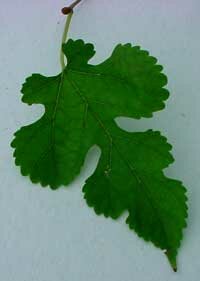
Leaf: Alternate, simple. There are two different types of leaves. One leaf is toothed and is almost a heart shape. It is about 3 to 5 inches long. The other leaf is lobed. There are usually 3 to 4 lobes on a leaf. They are also 3 to 5 inches long.
Flower: Staminate and pistillate flowers borne separately, either on the same tree or on different trees. Appearing as the leaves unfold, green clusters up to 2 inches long, the pistillate crowded into short, thick spikes up to 1 inch long.
Fruit: Resembling blackberries, up to one and a half inches long. The berries are first red and then turn purple, or nearly black.
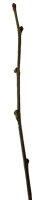
Twig: The twigs can be smooth or slightly hairy.
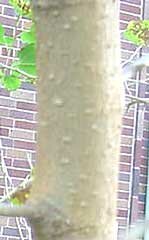
Bark: Dark brown, divided into long, scaly plates
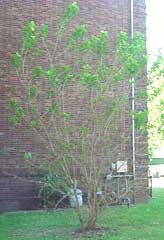
Form: Tree
The Red Mulberry's uses are fence posts, barrels, and edible fruits. Some ways to tell the Red Mulberry from the White Mulberry is by the hairs on the lower leaf. The Red Mulberry's medium height is up to 50 feet tall. The diameter of the trunk can get up to 2 feet. The Red Mulberry has many short branches.
Distribution: Eastern United States
Location: N 39° 025.44' W 89° 56.879' In front of Meissner Elementary School.
N 39°02.48 W89°57.69 Northern part of Bunker Hill High School campus.
© Community Unit School District #8 Bunker Hill, 504 E. Warren, Bunker Hill, IL 62014
References:
Bell, C. Ritchie and Anne H. Lindsey, Fall Color and Woodland Harvests. Chapel Hill, NC: Laurel Hill Press, 1990
Cassie, Brian, First Field Guide Trees. New York, NY: Scholastic Inc., 1999
Mohlenbrock, Robert H., Forest Trees of Illinois. Springfield, IL: 1992