
Nowadays, playing online poker has become an attractive option for card game enthusiasts. One of Indonesia's best online poker networks is IdnPoker, managed by IDN PLAY. By downloading their online poker mobile app, you can enjoy a real-time poker experience anytime, anywhere. No need to go to a casino; simply use your smartphone or tablet to connect with thousands of other poker players across Indonesia. You can experience the thrill of betting, bluffing, and winning poker games easily through Nirwanapoker, the official IDN Play agent website.
Betting at Toto Macau market becomes more challenging when you understand how previous data of winning numbers can guide your bets. This data reflects the history of drawn numbers and can be analyzed to reveal specific patterns. If you pay attention, you'll notice frequent number combinations or identical numbers appearing within a specific time frame. For a comprehensive data source, the website which provides data Toto Macau is a useful option. With a simple interface and daily updates, players can instantly check the latest results. Don't hesitate to try this technique in your daily strategy. Every opportunity is open to the diligent.
Banyak yang bicara, sedikit yang valid. IDNSLOT adalah situs penyedia link slot online resmi idn play dengan update yang terus bergerak. Bukan janji manis—ini soal akses yang benar di waktu yang tepat. Terlambat satu langkah, beda hasilnya. Masuk sekarang, jangan tunggu besok.
Fruit: male and female cones with bad odor and thick edible kernel
Twig: light green to light brown
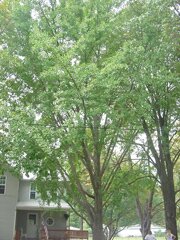
Bark: gray, becoming rough and deeply furrowed
Form: tree
Fossils showed that many different Ginkgoes existed in the past. Only one species remains today. It would be extinct if it had not been planted in China and Japan. It is a popular ornamental tree because it is resistant to insects, disease, and pollution. The female tree's seeds reek like rancid butter; they should not be touched because the smell will stay after contact.
The Ginkgo tree can be found on lawns and along streets in most soils. It is native to SE China and it is planted in the E. United States and on the Pacific Coast.
Location: In the front yard, middle tree at 422 S. Franklin, Bunker Hill, IL.
© Community Unit School District #8, Bunker Hill 504 E. Warren, Bunker Hill, IL 62014
References:
Brockman, C. Frank. Trees of North America. New York, NY: Golden Press, 1968
Little, Elbert L. A Field Guide to Trees: Western Region. New York, NY: Alfred A. Knopf Inc., 1980.
Wernert, Susan J. ed. North American Wildlife Pleasantville, NY: Reader's Digest, 1982.